
16
Oct
The barrier effect of aluminium: packaging technology against food waste
In the global debate on sustainable consumption models, food waste represents one of the most urgent and complex challenges of our time. When food is lost or spoilt along the production chain or inside the home, it is not just food that is thrown away; all the precious natural resources used to produce it—such as water, energy, and cultivated land—are also wasted.
While many strategies to tackle this phenomenon focus on shopping planning, a silent yet essential technological element can make all the difference: the correct choice of packaging material. Packaging is not merely a container; it is the primary shield protecting food from external elements. In this context, aluminium positions itself as a fundamental ally thanks to its exceptional intrinsic physical properties.
Chemical and biological deterioration: the enemies of freshness
To understand how to reduce food waste, it is necessary to analyse the factors causing the premature spoilage of food. Once packaged, fresh or cooked foods are constantly exposed to invisible threats:
- Light and UV rays: These accelerate the oxidation of fats and the degradation of vitamins, altering the original colour and flavour of the food.
- Oxygen and moisture: These create the ideal environment for the proliferation of bacteria, mould, and micro-organisms, as well as causing dry foods to lose their texture or fresh ones to dehydrate.
- External contaminants and odours: These can compromise the organoleptic integrity of food inside fridges or during logistics and transport phases.
The Contital solution: the total impermeability of aluminium
The scientific answer to these critical issues lies in the so-called “barrier effect”. Unlike other flexible or plastic materials that feature micro-porosities invisible to the human eye, aluminium offers a total and impenetrable protective barrier regardless of its thickness.
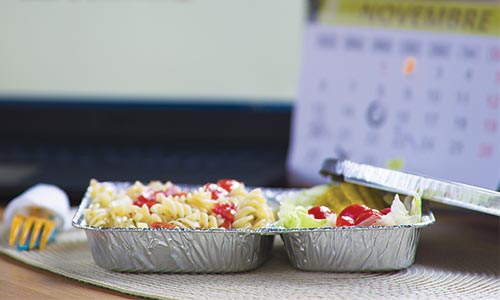
Aluminium sheets and containers completely block the passage of light, oxygen, moisture, and micro-organisms. This absolute protection literally seals the internal atmosphere of the packaging, drastically slowing down natural chemical and biological degradation processes. The practical result is a significant extension of shelf life (commercial life), both for ready meals in gastronomies and for semi-finished products in the large-scale food industry.
Prolonging the stability of food by even just a few days gives the distribution chain more time to sell it and the final consumer more time to eat it, dramatically cutting down the percentages of food that end up prematurely in the bin.
A sustainable and infinite cycle
Tackling food waste through aluminium also allows businesses to fully embrace the principles of the circular economy. Besides saving food during its useful life, the packaging itself never turns into permanent waste: aluminium trays and foils are 100% and infinitely recyclable without losing any chemical or physical properties. Protecting food resources today while safeguarding the planet tomorrow is the true challenge that Contital pursues through the development of efficient and circular packaging solutions.
